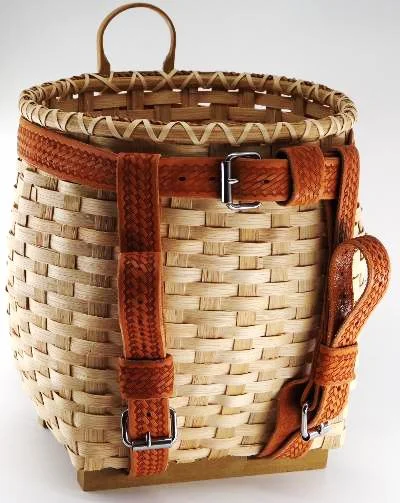


Split Wood Basket Class with Anna Greinetz and Abraham Bear April 8-11, 2027 *Only 6 Slots Available*
Join Anna & Abraham (Abe) as they guide you through the traditional craft of Split Wood Basketry.
This skill set is deeply rooted in the traditions of Appalachian craftsmanship, where split wood, hand tools, and careful attention to the natural qualities of the material come together to create baskets that are both useful and beautiful. In this four-day workshop, students will be introduced to the process of making a traditional split-wood basket using white oak and maple, with an emphasis on understanding the materials, learning fundamental techniques, and developing confidence with hand tools.
Designed to be beginner-friendly, this workshop will guide students through the major stages of basket construction. Participants will learn how to select and prepare appropriate wood, work with split material, and build a basket from the bottom up. Demonstrations and hands-on instruction will cover basic weaving techniques, shaping, corner and side construction, rim preparation, and finishing.
Students will work with both split white oak and split maple, exploring the distinct qualities of each material and how they can be used together in basket construction. Processing demonstrations will introduce participants to traditional tools and methods for preparing wood for basketry. Students will gain a better understanding of how grain, growth patterns, moisture, and the natural characteristics of the wood affect the way it splits, bends, and weaves.
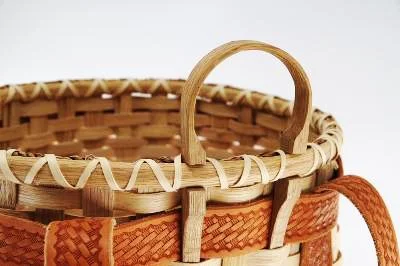
Basket components, including rims, handles, and solid bottom plates, will be provided so that students can focus on learning how to make splits, how to construct a basket and to complete their projects within the four-day workshop. Instruction and practice in making these components will also be included for students who would like to develop those skills. This approach allows participants to experience both the efficiency of working with prepared components and the traditional processes used to make them.
Throughout the workshop, instruction will focus not only on learning individual techniques, but also on understanding how those techniques work together to create a strong, well-shaped basket. Discussion will include material selection, splitting and shaving, weaving, shaping and tension, maintaining consistent dimensions, rim and handle construction, bottom construction, and finishing.
Students should expect to spend substantial time working with hand tools and handling split wood. Although the class is appropriate for beginners, good hand strength and a basic understanding of woodworking are required. Participants should be comfortable safely handling hand tools and working with wood for extended periods. Previous basket-making experience is useful, but not necessary.
By the end of the four-day workshop, each student will have completed a basket while gaining practical experience with traditional basket-making tools, split-wood preparation, and construction techniques. Students will also leave with a stronger understanding of white oak and maple as basket-making materials and the skills needed to continue exploring split-wood basketry on their own.
Materials
Materials provided for the workshop will include:
Prepared and unprocessed basket-making materials (white oak and maple)
Rims
Handles
Solid bottom plates
Additional oak and maple material for practice and demonstrations
Tools Provided
A variety of traditional and modern hand tools will be available for students to use, including:
Drawknives
Froes
Scraping knives
Shaving horses
Clips and other necessary construction tools
Tools and Supplies to bring
Craft shears
Pencil(s), notepad
Measuring tape
Scraping knife
Small scrap leather or piece of denim
Personal safety equipment, if preferred
This class is beginner-friendly, but participants should be prepared for a physically hands-on workshop. Good hand strength and a basic understanding of woodworking and hand-tool use are essential.
Please note, the registration deadline for this class is March 26th, 2027.
Cancellation policy: Because we confirm instructors and finalize class planning in advance, no refunds will be issued after the class registration deadline. At that point, it is often difficult to fill an open space in the class on short notice.
Join Anna & Abraham (Abe) as they guide you through the traditional craft of Split Wood Basketry.
This skill set is deeply rooted in the traditions of Appalachian craftsmanship, where split wood, hand tools, and careful attention to the natural qualities of the material come together to create baskets that are both useful and beautiful. In this four-day workshop, students will be introduced to the process of making a traditional split-wood basket using white oak and maple, with an emphasis on understanding the materials, learning fundamental techniques, and developing confidence with hand tools.
Designed to be beginner-friendly, this workshop will guide students through the major stages of basket construction. Participants will learn how to select and prepare appropriate wood, work with split material, and build a basket from the bottom up. Demonstrations and hands-on instruction will cover basic weaving techniques, shaping, corner and side construction, rim preparation, and finishing.
Students will work with both split white oak and split maple, exploring the distinct qualities of each material and how they can be used together in basket construction. Processing demonstrations will introduce participants to traditional tools and methods for preparing wood for basketry. Students will gain a better understanding of how grain, growth patterns, moisture, and the natural characteristics of the wood affect the way it splits, bends, and weaves.
Basket components, including rims, handles, and solid bottom plates, will be provided so that students can focus on learning how to make splits, how to construct a basket and to complete their projects within the four-day workshop. Instruction and practice in making these components will also be included for students who would like to develop those skills. This approach allows participants to experience both the efficiency of working with prepared components and the traditional processes used to make them.
Throughout the workshop, instruction will focus not only on learning individual techniques, but also on understanding how those techniques work together to create a strong, well-shaped basket. Discussion will include material selection, splitting and shaving, weaving, shaping and tension, maintaining consistent dimensions, rim and handle construction, bottom construction, and finishing.
Students should expect to spend substantial time working with hand tools and handling split wood. Although the class is appropriate for beginners, good hand strength and a basic understanding of woodworking are required. Participants should be comfortable safely handling hand tools and working with wood for extended periods. Previous basket-making experience is useful, but not necessary.
By the end of the four-day workshop, each student will have completed a basket while gaining practical experience with traditional basket-making tools, split-wood preparation, and construction techniques. Students will also leave with a stronger understanding of white oak and maple as basket-making materials and the skills needed to continue exploring split-wood basketry on their own.
Materials
Materials provided for the workshop will include:
Prepared and unprocessed basket-making materials (white oak and maple)
Rims
Handles
Solid bottom plates
Additional oak and maple material for practice and demonstrations
Tools Provided
A variety of traditional and modern hand tools will be available for students to use, including:
Drawknives
Froes
Scraping knives
Shaving horses
Clips and other necessary construction tools
Tools and Supplies to bring
Craft shears
Pencil(s), notepad
Measuring tape
Scraping knife
Small scrap leather or piece of denim
Personal safety equipment, if preferred
This class is beginner-friendly, but participants should be prepared for a physically hands-on workshop. Good hand strength and a basic understanding of woodworking and hand-tool use are essential.
Please note, the registration deadline for this class is March 26th, 2027.
Cancellation policy: Because we confirm instructors and finalize class planning in advance, no refunds will be issued after the class registration deadline. At that point, it is often difficult to fill an open space in the class on short notice.